Browsing 'Programming': Posts from Game Design and Programming

Board game analysis – Dust
Introduction
During the course Advanced game design we were split into groups to play and analyse a board game. Our group chose the strategy game Dust.
Game description
Dust is a board strategy game, for two to six players, similar to RISK where your objective is to hold key locations on the game board which give victory points and the first to a set amount of victory points win. To do this the players have different cards and units to their disposal. The […]
Board game analysis – Dust
Introduction
During the course Advanced game design we were split into groups to play and analyse a board game. Our group chose the strategy game Dust.
Game description
Dust is a board strategy game, for two to six players, similar to RISK where your objective is to hold key locations on the game board which give victory points and the first to a set amount of victory points win. To do this the players have different cards and units to their disposal. The […]

Week 2, MDA-framework.
So week number two has passed. This week we were thought of the MDA framework. MDA stands for Mechanics-Dynamics-Aesthetics.
Mechanics is in short terms how a game function and what the played can do within the game.
Dynamics is how the game is played by the player.
Aesthetics is how the player will or should feel when playing the game.
Also during this week we made a sissyfight revamp, which we call Master Ai.
It is pretty much a quiz game, which Adam(our teacher) did […]
Week 2, MDA-framework.
So week number two has passed. This week we were thought of the MDA framework. MDA stands for Mechanics-Dynamics-Aesthetics.
Mechanics is in short terms how a game function and what the played can do within the game.
Dynamics is how the game is played by the player.
Aesthetics is how the player will or should feel when playing the game.
Also during this week we made a sissyfight revamp, which we call Master Ai.
It is pretty much a quiz game, which Adam(our teacher) did […]
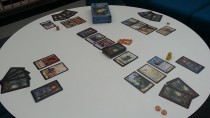
Board Game Analysis – Citadels + The Dark City Expansion
Introduction
We were tasked to analyze a Board Game for a course; Advanced Game Design. We had earlier been divided in to groups of around 6 people each. We got to choose what game we wanted to play ourselves, wither from a big selection of games that the school owned or we could choose to play a game we owned ourselves. We selected a game called Citadels together with an expansion for the game called The Dark City.
Citadels + The Dark […]
Board Game Analysis – Citadels + The Dark City Expansion
Introduction
We were tasked to analyze a Board Game for a course; Advanced Game Design. We had earlier been divided in to groups of around 6 people each. We got to choose what game we wanted to play ourselves, wither from a big selection of games that the school owned or we could choose to play a game we owned ourselves. We selected a game called Citadels together with an expansion for the game called The Dark City.
Citadels + The Dark […]
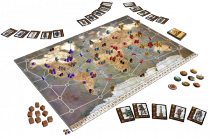
Analysing a Boardgame #1
The second year of game design has started, and with it a new task to analyze board games.
The task consists of first playing the game and then deciding the objectively worst and best sides of the game. After that we are to decide the core game system, meaning the system that the entire game revolves around, and then defining the objects, functions and the properties, behavior and relationships that is this game.
And then we choose the subjectively most interesting system […]
Analysing a Boardgame #1
The second year of game design has started, and with it a new task to analyze board games.
The task consists of first playing the game and then deciding the objectively worst and best sides of the game. After that we are to decide the core game system, meaning the system that the entire game revolves around, and then defining the objects, functions and the properties, behavior and relationships that is this game.
And then we choose the subjectively most interesting system […]

Space Shooter idea #1
So some kind of generic Gradius 3 game/asteroid.
Except with the “unique” mechanics: “Thrust” – accelerate forward to mouse location. If enemy is hit during the way they gain the players momentum+x and bouncy around like you would play pool. If two enemies collide something will happen ofcourse.
Second mechanic: “Portal” creates a portal in a solid map object making it passable for the ship and other debris for a duration of time. can also be used to travel from the bottom […]
Space Shooter idea #1
So some kind of generic Gradius 3 game/asteroid.
Except with the “unique” mechanics: “Thrust” – accelerate forward to mouse location. If enemy is hit during the way they gain the players momentum+x and bouncy around like you would play pool. If two enemies collide something will happen ofcourse.
Second mechanic: “Portal” creates a portal in a solid map object making it passable for the ship and other debris for a duration of time. can also be used to travel from the bottom […]
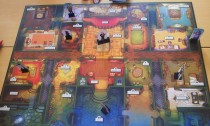
Analyzing: Kill Doctor Lucky
Introduction:
We in the Game Design program got an assignment, to analyze a board game that we chose in a group. The game my group chose is a game called Kill Doctor Lucky.
The game:
So, the game is about killing a man named doctor Lucky. You play as one of 3-7 people that has been invited to his mansion a stormy midsummers eve. The house is quite big, sporting 24 named rooms, 6 hallways and […]

Analyzing: Kill Doctor Lucky
Introduction:
We in the Game Design program got an assignment, to analyze a board game that we chose in a group. The game my group chose is a game called Kill Doctor Lucky.
The game:
So, the game is about killing a man named doctor Lucky. You play as one of 3-7 people that has been invited to his mansion a stormy midsummers eve. The house is quite big, sporting 24 named rooms, 6 hallways and […]

Master AI
Me and my group( Anders, Christian, David, Isak, Kim, Ludvig) has made a game based out of sissyfight. This was of course our assignment.
Firstly we added three mechanics. 1 which is that we should place all cards upside down, 2 is that we added a reveal card and 3 is that we should have a judge to calculate all damage.
Then the next day we got a memo to change our already changed version so that it would be educational. That […]
Master AI
Me and my group( Anders, Christian, David, Isak, Kim, Ludvig) has made a game based out of sissyfight. This was of course our assignment.
Firstly we added three mechanics. 1 which is that we should place all cards upside down, 2 is that we added a reveal card and 3 is that we should have a judge to calculate all damage.
Then the next day we got a memo to change our already changed version so that it would be educational. That […]
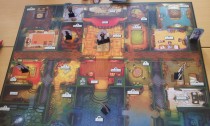
Board Game Analysis: Kill Dr. Lucky
Back again, after a minor hiatus! This time, an assignment was given to pick a board game, play it in a group, and analyze it, determining the core game system (including objects, properties, behaviours and relationships), the good and bad sides of the game, and the most interesting system.
The game we picked was Kill Doctor Lucky. It is a turn-based game for between 3 and 7 players ages 10 and above (according to the box), which works sort […]
Board Game Analysis: Kill Dr. Lucky
Back again, after a minor hiatus! This time, an assignment was given to pick a board game, play it in a group, and analyze it, determining the core game system (including objects, properties, behaviours and relationships), the good and bad sides of the game, and the most interesting system.
The game we picked was Kill Doctor Lucky. It is a turn-based game for between 3 and 7 players ages 10 and above (according to the box), which works sort […]
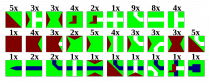
Boardgame Analysis: Carcasonne
As a school task our group was supposed to play and analyze a board game free of choice. We picked Carcasonne: A game with medieval setting in which you are supposed to build castles and roads together with your friends, but claim as much of it as you can as your own to get the highest score.
In Carcasonne two to five players are recommended, and also preferably a completely flat square meter to play it on.
There are two different types […]
Boardgame Analysis: Carcasonne
As a school task our group was supposed to play and analyze a board game free of choice. We picked Carcasonne: A game with medieval setting in which you are supposed to build castles and roads together with your friends, but claim as much of it as you can as your own to get the highest score.
In Carcasonne two to five players are recommended, and also preferably a completely flat square meter to play it on.
There are two different types […]

Board game analysis – Dust
Introduction
During the course Advanced game design we were split into groups to play and analyse a board game. Our group chose the strategy game Dust.
Game description
Dust is a board strategy game, for two to six players, similar to RISK where your objective is to hold key locations on the game board which give victory points and the first to a set amount of victory points win. To do this the players have different cards and units to their disposal. The […]
Board game analysis – Dust
Introduction
During the course Advanced game design we were split into groups to play and analyse a board game. Our group chose the strategy game Dust.
Game description
Dust is a board strategy game, for two to six players, similar to RISK where your objective is to hold key locations on the game board which give victory points and the first to a set amount of victory points win. To do this the players have different cards and units to their disposal. The […]
An Analysis of Citadels
Citadels is a bluffing card game where the players try to build the greatest city. There are four components in the game: character cards, district cards, gold tokens and the crown token.
The game is played in rounds; each round all players, starting with the player who have the crown token, secretly selects a character to play as. Then, the characters are called out one by one and if a player have the character that is called, he takes his turn. […]
An Analysis of Citadels
Citadels is a bluffing card game where the players try to build the greatest city. There are four components in the game: character cards, district cards, gold tokens and the crown token.
The game is played in rounds; each round all players, starting with the player who have the crown token, secretly selects a character to play as. Then, the characters are called out one by one and if a player have the character that is called, he takes his turn. […]

Week 2, MDA-framework.
So week number two has passed. This week we were thought of the MDA framework. MDA stands for Mechanics-Dynamics-Aesthetics.
Mechanics is in short terms how a game function and what the played can do within the game.
Dynamics is how the game is played by the player.
Aesthetics is how the player will or should feel when playing the game.
Also during this week we made a sissyfight revamp, which we call Master Ai.
It is pretty much a quiz game, which Adam(our teacher) did […]
Week 2, MDA-framework.
So week number two has passed. This week we were thought of the MDA framework. MDA stands for Mechanics-Dynamics-Aesthetics.
Mechanics is in short terms how a game function and what the played can do within the game.
Dynamics is how the game is played by the player.
Aesthetics is how the player will or should feel when playing the game.
Also during this week we made a sissyfight revamp, which we call Master Ai.
It is pretty much a quiz game, which Adam(our teacher) did […]